Watercolor Cute Hedgehog Clipart: Playful Design Assets for Modern Creatives
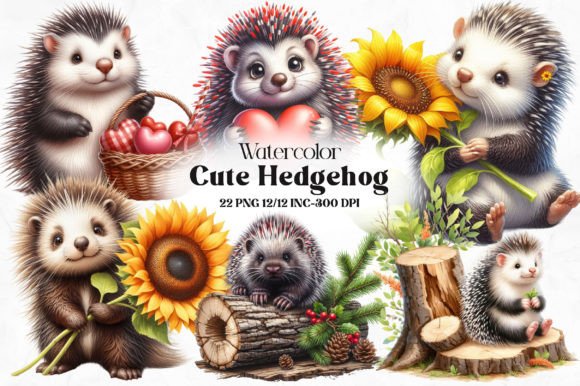
If you’ve spent any time browsing design marketplaces, you’ve likely come across watercolor cute hedgehog clipart. The name alone suggests something warm, approachable, and slightly whimsical. At first glance, these hand-painted illustrations of hedgehogs (often curled up, peeking out from leaves, or holding small objects) might seem like just another cute graphic. But when you look closer, you’ll notice layered washes, soft edge transitions, and delicate splatter effects that give each piece a tactile quality. The style leans toward gentle pastels—lavenders, soft greens, blush pinks—with occasional darker browns for contrast. The result is a collection that feels both polished and spontaneous.
What makes these clipart assets particularly appealing is their versatility. Unlike rigid vector icons, watercolor hedgehog graphics carry an organic, imperfect charm. They don’t scream “stock graphic.” Instead, they bring a handmade, human feel to projects. And because they’re typically offered as transparent PNGs or high-resolution files, they integrate easily into both digital and print workflows. Whether you’re a small business owner designing product labels or a marketer crafting social media visuals, watercolor cute hedgehog clipart offers a quick way to inject personality without starting from scratch.
Visual Personality and Style: More Than Just Cute
Let’s be honest—there are a thousand “cute” graphic sets out there. But watercolor cute hedgehog clipart distinguishes itself through its texture and lighting. The watercolor medium creates natural gradients: a hedgehog’s spines might fade from warm brown to almost transparent beige, mimicking real pigment pooling on paper. This subtle depth makes the illustrations feel dimensional, even in a flat digital file. The eyes are typically large and glossy (think kawaii influence), but the watercolor wash keeps them from looking overly artificial.
From a branding perspective, this style signals approachability and sincerity. A clean vector hedgehog might work for a tech startup’s mascot, but a watercolor version says “we care about craftsmanship.” That emotional weight is important for audience engagement, especially when targeting parents, children, or nature-oriented communities. The hedgehog itself, with its shy demeanor and protective spines, naturally evokes themes of gentleness and resilience—perfect for mental health brands, children’s literature, or eco-friendly products.
Where the Style Makes an Impact
I’ve seen watercolor cute hedgehog clipart used effectively in five main areas:
- Children’s publishing and editorial design – The soft edges pair well with a handwritten font or a rounded sans serif. In a bedtime story book, these illustrations can break up text blocks without overwhelming the page layout.
- Packaging design for organic or handmade goods – Soap labels, tea tins, and honey jars benefit from the natural watercolor texture. It signals “small batch” and “authenticity” better than a glossy photo.
- Social media graphics for lifestyle brands – Instagram posts featuring these hedgehogs alongside a modern serif quote tend to earn high engagement. The contrast between the whimsical art and a clean sans serif creates visual hierarchy.
- Paper goods and stationery – Greeting cards, wedding invitations, and baby shower decor. The watercolor motif adds a personal touch that offset printing still can’t fully replicate with flat vectors.
- Digital products and web design – Blog headers, email newsletter illustrations, or site icons. When used sparingly, watercolor cute hedgehog clipart can soften a minimal layout without making it feel childish.
Influencing Readability, Hierarchy, and Brand Perception
Now, you might wonder how clipart affects readability. Directly, it doesn’t—but it indirectly shapes where a reader’s eyes go. Because watercolor textures have natural edges (not sharp pixel borders), they create a subtle focal point. If you place a hedgehog illustration next to a headline set in a bold display font, the contrast draws attention to the title. Conversely, if the illustration is too large or too bright, it can compete with body text. The key is balance. Use clipart as a visual accent, not the main event.
From a brand identity standpoint, incorporating watercolor cute hedgehog clipart consistently across touchpoints builds recognition. Imagine a small skincare company that uses the same hedgehog illustration on its website hero image, product labels, and thank-you cards. Over time, customers associate that soft, hand-painted look with the brand’s values: gentle, natural, and personal. This is where consistency matters more than any single design choice. The clipart becomes a recognizable asset in the brand identity toolkit.
On a technical level, the style works especially well when paired with complementary design assets. For instance, a script font with flourishes can clash with watercolor’s organic feel—better to pair it with a handwritten font that has irregular strokes. Modern sans serif fonts like a geometric typeface also balance the clipart’s softness. And if you’re layering text over the hedgehog, ensure enough contrast (dark text on light wash background). Readability always comes first.
Evaluating Project Fit
Not every project needs clipart. Before you purchase a set, ask: Does the audience appreciate handmade visuals? Is the project tone playful or serious? A financial services newsletter likely won’t benefit from hedgehog illustrations. But a nature education course, a children’s menu, or a boutique nursery all would. Evaluate the watercolor style against your existing brand guidelines. If your brand is all about crisp minimalism, introducing watercolor elements might feel disjointed unless you use them as deliberate accents.
Testing Font Pairings
When I work with clients on branding projects that include clipart, I always recommend testing at least three font pairings. For watercolor cute hedgehog clipart, I’ve found these combos work well:
- Handwritten font (primary) + sans serif font (body) – The handwriting echoes the hand-painted feel. A clean sans serif keeps body copy readable.
- Modern serif font (headings) + rounded sans serif (body) – The serif adds warmth; the rounded sans serif complements the hedgehog’s curves.
- Script font (short titles only) + minimalist sans serif (everything else) – Use script sparingly to avoid visual clutter.
These pairings create visual hierarchy without fighting the clipart’s organic nature. And always preview the combination at different sizes. A delicate handwritten font might become illegible when reduced for a label—choose a bolder weight or a different typeface.
Reviewing Included Styles and Licensing
Clipper sets vary wildly. Some watercolor cute hedgehog clipart bundles include only a few poses; others offer dozens of elements (leaves, flowers, frames, crowns). For commercial projects, pay close attention to the license. Is it royalty-free for both personal and commercial use? Are there limits on the number of products you can create? Can you use it in logo design (trademark issues)? Many creators allow commercial use but restrict reselling the clipart as standalone art. Always read the EULA. If you’re a designer reselling final products, you need clear commercial rights.
Readability Considerations
Watercolor images have lighter, more transparent areas. When placing text, avoid those washed-out sections unless you add a background shape (a solid circle, a semi-opaque box) behind the type. Alternatively, use a dark-toned hedgehog element and overlay white text. But be mindful of the watercolor texture showing through—test in grayscale to ensure enough contrast. This is especially critical for web design where screen brightness varies.
Realistic Examples: From Concept to Final Design
Let me walk through a scenario. A small organic tea brand wants a new label. Their audience is women aged 25–40 who value sustainability. The name: “Quiet Hedgehog Tea Co.” They want a soft, nature-inspired look. Using watercolor cute hedgehog clipart, I’d select a hedgehog sitting beside a teacup illustration. I’d pair it with a handwritten font for the brand name and a clean sans serif for ingredients. The clipart becomes the label’s hero image. On social media, I’d repeat the same illustration in Instagram posts, but crop it differently to create variety. Over time, customers recognize that hedgehog across touchpoints—brand identity strengthened without a full custom illustration budget.
Another example: a children’s book author self-publishing a story about forest animals. They could use the clipart for internal chapter headings and full-page illustrations. The watercolor texture gives the book a premium feel that hand-drawn art might lack. They’d likely pair it with an easy-to-read serif font for body text and a rounded sans serif for titles. By using the clipart consistently (same hedgehog character throughout), the author builds a cohesive visual world.
Final Observations and Recommendations
Watercolor cute hedgehog clipart is a versatile design asset that works best when you respect its handmade nature. Don’t try to make it look hyper-modern by adding harsh drop shadows or over-saturating colors. Instead, let it breathe. Use it as one ingredient in a balanced meal of fonts, colors, and layouts. If you’re a designer, stock a few sets in your library for quick client projects. If you’re a small business owner, invest in a well-reviewed bundle with a clear commercial license. And always test your pairings with real content before committing to final production.
At the end of the day, the best clipart is the one that feels invisible—enhancing your message without calling attention to itself as a graphic. With watercolor cute hedgehog clipart, you get that rare combination of charm and subtlety. Use it wisely, and your audience will smile without ever noticing the technique behind it.